
The world of finance is in the midst of a profound transformation, driven by the relentless innovation of Decentralized Finance (DeFi). What began as a niche experiment in blockchain technology has rapidly evolved into a formidable ecosystem, challenging traditional financial paradigms and offering new avenues for wealth creation, borrowing, lending, and investment. As we look towards 2026, the Future of DeFi is not just about incremental improvements; it’s about a fundamental restructuring of how financial services are delivered and consumed globally. This article will delve into four critical trends that are set to shape the DeFi landscape, offering recent updates and insights into their potential impact.
The journey of DeFi has been characterized by explosive growth, occasional volatility, and continuous evolution. From its nascent stages with simple lending protocols to today’s complex web of decentralized exchanges, yield farming, stablecoins, and non-fungible tokens (NFTs), DeFi has proven its resilience and adaptability. However, as it matures, several key challenges and opportunities are coming into sharper focus. Understanding these trends is crucial for anyone looking to navigate or invest in this rapidly expanding sector.
The promise of DeFi lies in its ability to disintermediate traditional financial institutions, offering greater transparency, accessibility, and efficiency. By leveraging blockchain technology, smart contracts automate agreements, removing the need for intermediaries and reducing transaction costs. This democratizing potential is what continues to attract a diverse range of participants, from individual retail investors to increasingly sophisticated institutional players. As we approach 2026, the convergence of technological advancements, regulatory clarity, and market demand will define the next chapter for the Future of DeFi.
1. Scalability Solutions: The Foundation for Mass Adoption
One of the most persistent hurdles for the widespread adoption of DeFi has been scalability. The underlying blockchain networks, particularly Ethereum, which hosts the majority of DeFi activity, have struggled with high transaction fees (gas fees) and slow transaction speeds during periods of heavy network congestion. This bottleneck has limited DeFi’s ability to compete with traditional financial systems that can process thousands of transactions per second. However, significant progress is being made, and by 2026, scalability solutions will be a cornerstone of the Future of DeFi.
Ethereum 2.0 (Eth2) and Sharding
The most anticipated scalability upgrade is Ethereum’s transition to a Proof-of-Stake (PoS) consensus mechanism, often referred to as Eth2 or the Merge, and subsequent upgrades like sharding. The Merge, completed in September 2022, significantly reduced Ethereum’s energy consumption and laid the groundwork for future scalability improvements. Sharding, expected in the coming years, will divide the Ethereum blockchain into multiple smaller, interconnected chains (shards) that can process transactions in parallel. This will drastically increase transaction throughput and reduce fees, making DeFi more accessible and affordable for a global audience.
Recent updates indicate that the development of sharding is progressing, with researchers and developers actively working on its implementation. While the exact timeline remains fluid, the commitment to these scaling solutions is unwavering. The impact of a fully scaled Ethereum network on the Future of DeFi cannot be overstated; it will unlock new possibilities for complex financial applications and onboard millions of new users.
Layer 2 Scaling Solutions
In parallel with Ethereum’s native upgrades, Layer 2 (L2) scaling solutions have emerged as vital components of the DeFi ecosystem. These solutions operate on top of the main blockchain (Layer 1) and process transactions off-chain, bundling them into a single transaction that is then settled on Layer 1. Popular L2 solutions include:
- Optimistic Rollups: Projects like Optimism and Arbitrum aggregate transactions off-chain and post a compressed version to the mainnet. They assume transactions are valid but allow a dispute period for anyone to challenge fraudulent ones.
- ZK-Rollups: Zero-Knowledge Rollups, such as zkSync and StarkNet, use cryptographic proofs to instantly verify the validity of off-chain transactions, offering higher security and faster finality.
- Sidechains: Independent blockchains with their own consensus mechanisms that run parallel to the main chain, like Polygon. They offer high throughput and low fees but rely on their own security models.
These L2 solutions are already making a significant impact, enabling faster and cheaper DeFi transactions. By 2026, we can expect a continued proliferation and specialization of L2s, with different solutions catering to specific use cases and user needs. The integration of L2s will become seamless, abstracting away much of the complexity for end-users and further propelling the Future of DeFi into mainstream adoption.
Alternative Layer 1 Blockchains
Beyond Ethereum, a growing number of alternative Layer 1 blockchains are vying for DeFi market share, each offering unique scalability approaches. Solana, Avalanche, Fantom, and Near Protocol are just a few examples that boast high transaction speeds and lower fees. While Ethereum remains dominant, these alternative L1s are fostering innovation and providing valuable competition, pushing the entire ecosystem forward.
The competition among L1s and L2s is healthy, driving continuous improvements in technology and user experience. By 2026, the DeFi landscape will likely feature a multi-chain environment where users interact with applications across various highly scalable networks, each optimized for different purposes. This interconnected web of scalable solutions will be fundamental to realizing the full potential of the Future of DeFi.
2. Regulatory Clarity and Mainstream Integration
The rapid growth of DeFi has outpaced regulatory frameworks, creating an environment of uncertainty that has hindered mainstream and institutional adoption. However, as DeFi matures, governments and financial bodies worldwide are beginning to grapple with how to regulate this nascent sector. By 2026, increased regulatory clarity will be a defining characteristic of the Future of DeFi, paving the way for greater integration with traditional finance.
Evolving Regulatory Approaches
Regulators face the complex task of balancing innovation with consumer protection and financial stability. Early approaches have varied widely, from outright bans in some jurisdictions to cautious exploration in others. However, there’s a growing consensus on the need for tailored regulations that address the unique characteristics of decentralized systems without stifling innovation.
Recent developments include the European Union’s Markets in Crypto-Assets (MiCA) regulation, which aims to provide a comprehensive framework for crypto assets, including stablecoins and other DeFi components. In the United States, various agencies like the SEC and CFTC are actively examining how existing securities and commodities laws apply to DeFi protocols. While a unified global approach is unlikely, regional frameworks will provide much-needed guidance.
By 2026, we can anticipate more jurisdictions implementing specific regulations for stablecoins, decentralized exchanges (DEXs), and lending protocols. This will likely involve requirements for know-your-customer (KYC) and anti-money laundering (AML) checks, particularly at the points where fiat currency interacts with DeFi. While some purists may view this as a compromise to the decentralized ethos, it is a necessary step for attracting institutional capital and protecting retail investors, ultimately shaping a more mature Future of DeFi.
Bridging Traditional Finance and DeFi
Regulatory clarity will act as a bridge, enabling greater integration between traditional finance (TradFi) and DeFi. Financial institutions, currently wary of regulatory risks, will be more willing to explore and offer DeFi-related products and services once a clear legal framework is in place. This could manifest in:
- Regulated DeFi products: Traditional banks and financial service providers offering access to DeFi yield opportunities or tokenized assets through compliant channels.
- Institutional participation: Hedge funds, asset managers, and corporate treasuries directly participating in DeFi protocols for treasury management, lending, and borrowing, under specific regulatory guidelines.
- Tokenization of real-world assets (RWAs): Regulatory frameworks will facilitate the tokenization of assets like real estate, commodities, and equities on blockchain, bringing significant liquidity and accessibility to these markets within the DeFi ecosystem.
The convergence of TradFi and DeFi is not about one replacing the other, but rather about co-evolution. By 2026, the lines between traditional and decentralized finance will become increasingly blurred, with hybrid models emerging that combine the strengths of both. This integration will be a hallmark of the Future of DeFi, expanding its reach and impact far beyond its current scope.
3. Enhanced Interoperability: A Seamless Multi-Chain Ecosystem
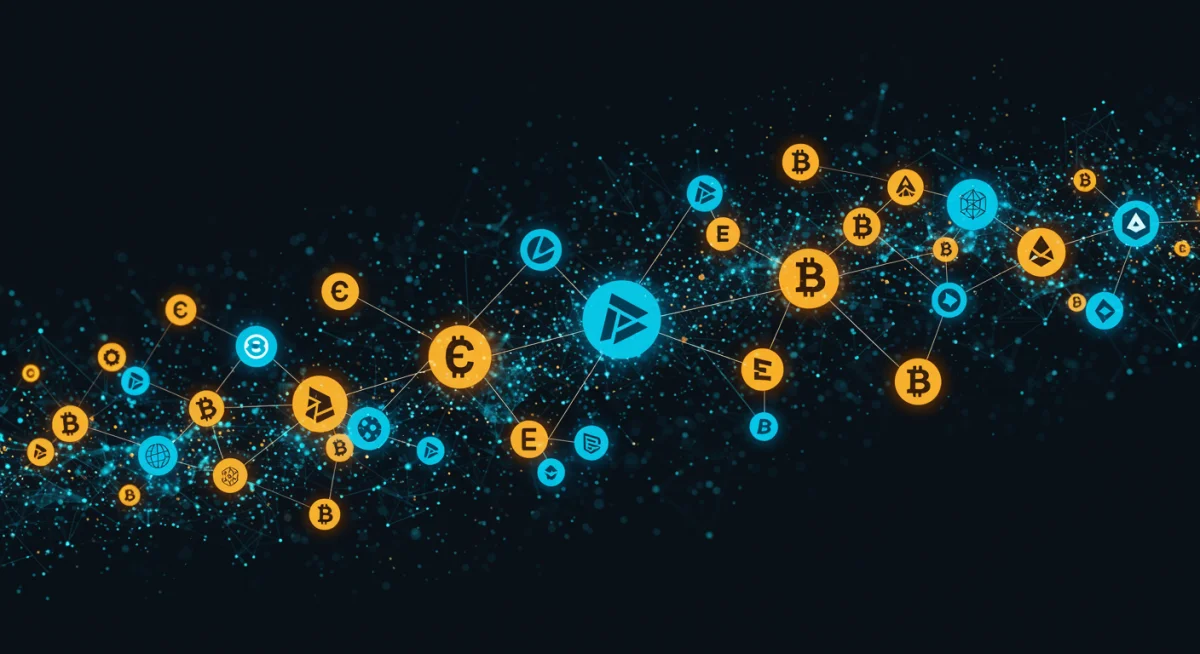
Currently, the DeFi landscape is fragmented, with numerous blockchains and Layer 2 solutions operating in silos. Moving assets or data between these different networks often requires complex and sometimes risky bridging solutions. For DeFi to achieve its full potential, a seamless, interoperable multi-chain ecosystem is essential. By 2026, enhanced interoperability will be a cornerstone of the Future of DeFi, allowing for fluid asset and data transfer across disparate networks.
Cross-Chain Communication Protocols
The development of robust and secure cross-chain communication protocols is paramount. Projects like Polkadot’s parachains, Cosmos’s Inter-Blockchain Communication (IBC) protocol, and Avalanche’s subnets are designed with interoperability as a core feature. These protocols enable different blockchains to communicate and exchange value and data securely, without relying on centralized intermediaries.
Recent advancements in these areas include more efficient bridging technologies and standardized messaging protocols. The goal is to make cross-chain interactions as simple and secure as transactions within a single blockchain. This will unlock significant capital efficiency and allow for more complex and innovative DeFi applications that can leverage assets and liquidity from multiple networks simultaneously. Imagine a lending protocol on Ethereum borrowing liquidity from Solana, or an NFT marketplace on Polygon interacting with assets from Arbitrum. This is the promise of enhanced interoperability for the Future of DeFi.
Unified Liquidity and Composability
True interoperability will lead to unified liquidity pools across different chains, solving the current problem of fragmented liquidity. When assets can move freely between networks, capital becomes more efficient, and users can access the best rates and opportunities regardless of which blockchain they are on. This will significantly enhance the user experience and reduce friction in the DeFi ecosystem.
Furthermore, interoperability will amplify the composability of DeFi protocols. Composability, often referred to as "money legos," allows developers to combine different DeFi protocols like building blocks to create new and innovative financial products. With cross-chain composability, developers will be able to integrate functionalities and assets from various blockchains, leading to an explosion of novel DeFi applications and services. This explosion of innovation is a key driver for the Future of DeFi.
Decentralized Identity and Reputation
Beyond asset transfer, interoperability will also extend to decentralized identity and reputation systems. Imagine a user’s credit score or verifiable credentials being portable across different DeFi protocols and even traditional financial institutions. This would enable undercollateralized lending, personalized financial products, and a more inclusive financial system. Projects are actively exploring ways to create self-sovereign identities that can be used across multiple chains, laying the groundwork for a more sophisticated and integrated Future of DeFi.
By 2026, the expectation is that users will no longer need to be acutely aware of which blockchain their assets or applications reside on. The underlying complexity of cross-chain communication will be abstracted away, presenting a unified and seamless experience. This level of interoperability will be crucial for DeFi to compete with the seamless experience offered by centralized financial platforms and will drive the next wave of adoption for the Future of DeFi.
4. Institutional Adoption and Real-World Asset Tokenization
While retail investors have been the early adopters of DeFi, the true inflection point for its growth will come with widespread institutional adoption. Institutions bring significant capital, expertise, and a demand for robust, compliant, and secure financial products. By 2026, institutional participation will be a major catalyst for the Future of DeFi, particularly through the tokenization of real-world assets (RWAs).
Increased Institutional Participation
Institutions are increasingly recognizing the potential of DeFi to offer superior yields, enhanced transparency, and greater efficiency compared to traditional finance. However, their participation has been cautious due to regulatory uncertainty, security concerns, and the nascent nature of many protocols. As these issues are addressed, more institutions will enter the DeFi space.
Recent trends show a growing interest from traditional financial players:
- Centralized Exchanges (CEXs) offering DeFi access: Major exchanges are building bridges to DeFi protocols, allowing their institutional clients to access yield farming and lending opportunities in a more familiar, regulated environment.
- Traditional banks exploring blockchain: Financial giants are experimenting with private and public blockchains for various use cases, including interbank settlements, tokenized securities, and digital currency initiatives.
- Specialized DeFi funds: Dedicated institutional funds are emerging, focused on investing in and developing DeFi protocols, signaling serious long-term commitment.
By 2026, we can expect to see a significant portion of institutional capital flowing into DeFi, not just through passive investment but also through active participation in governance, liquidity provision, and the development of new protocols. This influx of capital and expertise will further professionalize the sector and accelerate its innovation, solidifying the Future of DeFi.
Tokenization of Real-World Assets (RWAs)
One of the most transformative aspects of institutional adoption will be the widespread tokenization of real-world assets. Tokenizing RWAs involves representing ownership of physical or traditional financial assets (like real estate, stocks, bonds, commodities, or even intellectual property) as digital tokens on a blockchain. This brings numerous benefits:
- Increased Liquidity: RWAs are often illiquid. Tokenization allows for fractional ownership and easier transfer, making them more liquid and accessible to a broader investor base.
- Greater Accessibility: Investors worldwide can access previously inaccessible asset classes, breaking down geographical and financial barriers.
- Enhanced Transparency: Blockchain records ownership and transfers transparently and immutably.
- Efficiency and Automation: Smart contracts can automate dividend payments, interest disbursements, and other administrative tasks, reducing costs and human error.
Recent examples include platforms tokenizing real estate, private equity, and even carbon credits. By 2026, with clearer regulatory frameworks and more mature infrastructure, the tokenization of RWAs will become a significant growth driver for DeFi. This will bridge the vast value of traditional global assets with the efficiency and innovation of decentralized finance, creating hybrid financial products and markets that were previously unimaginable. This convergence will be a defining feature of the Future of DeFi, expanding its total addressable market exponentially.

Looking Beyond 2026: The Evolving Landscape of DeFi
While the four trends discussed — scalability, regulation, interoperability, and institutional adoption with RWA tokenization — will undoubtedly shape the Future of DeFi by 2026, it’s important to recognize that this is a rapidly evolving space. Several other emerging areas will also contribute to its long-term trajectory.
Decentralized Social Finance (DeSoc) and Identity
Beyond financial transactions, the principles of decentralization are extending to social interactions. Decentralized social finance (DeSoc) aims to give users more control over their data, content, and online identities. Integration of decentralized identity (DID) solutions within DeFi could revolutionize credit scoring, reputation systems, and personalized financial services, moving beyond traditional collateral requirements. The ability to leverage a verifiable, self-sovereign digital identity across various DeFi protocols will unlock new forms of lending, borrowing, and investment previously constrained by a lack of trust or traditional KYC hurdles. This deeper integration of identity will make the Future of DeFi more inclusive and sophisticated.
Privacy-Preserving DeFi
While transparency is a core tenet of public blockchains, there’s a growing demand for privacy-preserving solutions within DeFi, especially for institutional users and those concerned about financial surveillance. Zero-knowledge proofs (ZKPs) and other cryptographic techniques are being explored to enable private transactions and computations on public blockchains without compromising security or decentralization. This will be crucial for attracting a broader range of users and use cases, particularly in a regulated environment where certain financial activities require confidentiality. The development of robust and user-friendly privacy tools will be a significant factor in shaping the Future of DeFi.
User Experience and Abstraction
The current DeFi user experience can be daunting for newcomers, involving complex wallet management, gas fees, and technical terminology. For mass adoption, the user experience needs to become as intuitive as traditional online banking. Abstraction layers, simplified interfaces, and smart contract wallets that hide much of the underlying blockchain complexity will be key. We’re already seeing advancements in this area, with more user-friendly dApps and wallet connectors. By 2026, interacting with DeFi protocols should feel seamless and familiar, even for those without technical expertise, making the Future of DeFi truly accessible to everyone.
DeFi as a Service (DaaS)
Just as Software as a Service (SaaS) revolutionized software deployment, DeFi as a Service (DaaS) could empower businesses and developers to easily integrate DeFi functionalities into their existing applications or create new ones without needing to build everything from scratch. This could involve providing APIs for accessing liquidity pools, lending protocols, or tokenization services. DaaS models would significantly lower the barrier to entry for businesses looking to leverage blockchain technology, accelerating innovation and expanding the reach of DeFi into new industries and use cases. This service-oriented approach will be vital for the continued growth and embedding of the Future of DeFi into the broader digital economy.
Environmental Sustainability
The environmental impact of blockchain technology, particularly Proof-of-Work (PoW) chains, has been a significant concern. Ethereum’s transition to Proof-of-Stake (PoS) has dramatically reduced its energy consumption, setting a precedent for more sustainable blockchain operations. As DeFi continues to grow, there will be increasing pressure for all underlying networks and protocols to adopt environmentally friendly practices. Projects that prioritize energy efficiency and sustainability will gain a competitive advantage and appeal to a broader, more conscious user base. This focus on green technology will be an integral part of the responsible growth of the Future of DeFi.
Conclusion: A Decentralized Financial Renaissance
The Future of DeFi, as we approach 2026, is one of immense potential and transformative change. The convergence of advanced scalability solutions, a clearer regulatory landscape, seamless interoperability, and robust institutional adoption, particularly through RWA tokenization, will propel decentralized finance into a new era of maturity and mainstream acceptance. The challenges are significant, but the pace of innovation within this sector is unparalleled.
DeFi is not merely a technological innovation; it is a movement towards a more open, transparent, and equitable financial system. By addressing its current limitations and embracing these key trends, DeFi is poised to redefine how we interact with money, assets, and financial services globally. The journey will undoubtedly be dynamic, with new challenges and opportunities constantly emerging, but the trajectory towards a decentralized financial renaissance is clear. Staying informed about these recent updates and understanding the underlying forces at play is essential for anyone looking to participate in or benefit from the evolving Future of DeFi.
The coming years will witness DeFi moving from the fringes of finance to its core, offering a compelling alternative and complement to traditional systems. Whether you are a developer, an investor, a financial institution, or simply an observer, the impact of these trends will resonate across the global economy, making the Future of DeFi a crucial area to watch.