
Bitcoin Halving 2024: 3 Key Market Shifts US Investors Must Understand for 2026 Profitability
The cryptocurrency world is abuzz with anticipation for the Bitcoin Halving 2024, an event that historically reshapes the digital asset landscape. For US investors, understanding the profound implications of this quadrennial phenomenon is not merely an academic exercise; it’s a critical step towards securing significant profitability by 2026. This comprehensive guide delves into three pivotal market shifts expected to unfold, equipping you with the foresight needed to navigate the post-halving environment effectively.
The Bitcoin Halving, a pre-programmed event embedded in Bitcoin’s code, occurs approximately every four years, or after every 210,000 blocks are mined. Its primary function is to reduce the reward miners receive for validating transactions by half. This mechanism is fundamental to Bitcoin’s deflationary nature, ensuring its scarcity and, theoretically, its long-term value appreciation. The upcoming Bitcoin Halving 2024 will cut the block reward from 6.25 BTC to 3.125 BTC, drastically impacting supply dynamics.
Past halvings – in 2012, 2016, and 2020 – have consistently preceded significant bull runs in the Bitcoin market. While historical performance is not indicative of future results, the underlying economic principles that drive these cycles remain constant. Reduced supply, coupled with sustained or increasing demand, naturally exerts upward pressure on price. However, the market has matured considerably since the last halving, introducing new variables and complexities that demand a nuanced understanding.
For US investors, the stakes are particularly high. Regulatory developments, institutional adoption, and macroeconomic factors all play a more prominent role than ever before. Therefore, a strategic approach to the Bitcoin Halving 2024 requires a holistic view, considering not just the direct supply shock but also its ripple effects across the broader financial ecosystem. This article aims to provide that holistic view, focusing on actionable insights for the savvy investor targeting 2026 profitability.
Shift 1: Intensified Supply Shock and Price Volatility Post-Bitcoin Halving 2024
The most immediate and direct consequence of the Bitcoin Halving 2024 will be an intensified supply shock. With the block reward cut in half, the rate at which new Bitcoin enters circulation will be significantly reduced. This fundamental economic principle of supply and demand dictates that if demand remains constant or increases while supply diminishes, prices are likely to rise. However, the path to price appreciation is rarely linear, especially in the volatile world of cryptocurrency.
Historically, the periods immediately following a halving have been characterized by increased price volatility. This is due to a confluence of factors, including speculative trading, miner adjustments, and market sentiment reacting to the new supply dynamics. US investors should anticipate a “shake-out” period, where weaker hands might be flushed out, and the market finds its new equilibrium. This volatility, while daunting to some, can present lucrative entry and exit points for those with a well-defined strategy and a long-term perspective.
The impact of this supply shock is not merely theoretical; it has tangible effects on market participants. Miners, facing reduced rewards, will need to be more efficient to remain profitable. This could lead to a consolidation in the mining industry, with smaller, less efficient operations potentially exiting the market. The remaining, more robust miners will have a stronger incentive to hold onto their Bitcoin, further limiting the readily available supply on exchanges. This “miner capitulation” or “miner consolidation” phase has been observed in previous cycles and is often a precursor to significant price movements.
Furthermore, the narrative surrounding Bitcoin’s scarcity will be amplified. As institutional investors increasingly view Bitcoin as “digital gold” – a store of value and an inflation hedge – the reduced supply will only strengthen this perception. The mainstream media attention surrounding the Bitcoin Halving 2024 will also introduce more retail investors to this narrative, potentially driving new demand into the market. This combination of reduced supply and heightened demand is the primary driver behind the expected upward trajectory for Bitcoin’s price towards 2026.
For US investors, understanding this intensified supply shock means preparing for potential short-term price dips that could be buying opportunities, rather than reasons for panic. It also means recognizing that the “easy money” days of rapid, uninterrupted gains might be tempered by periods of consolidation. Patience and a clear understanding of Bitcoin’s long-term value proposition will be paramount. Diversifying portfolios and adopting dollar-cost averaging strategies can help mitigate the risks associated with this expected volatility, positioning investors for sustained growth.
The supply shock from the Bitcoin Halving 2024 is not just about the immediate reduction in new coins. It’s about how this reduction filters through the entire ecosystem, affecting miner behavior, institutional investment theses, and broader market sentiment. Those who grasp these interconnected dynamics will be best positioned to capitalize on the subsequent price appreciation leading into 2026.
Shift 2: Increased Institutional Adoption and Regulatory Scrutiny
The landscape surrounding the Bitcoin Halving 2024 is vastly different from previous cycles, primarily due to the dramatic increase in institutional adoption and the evolving regulatory environment. These two factors are inextricably linked and will play a critical role in shaping market dynamics and investor confidence post-halving.
Institutional interest in Bitcoin has surged in recent years, with the launch of Bitcoin ETFs in the US being a watershed moment. These investment vehicles provide traditional investors with regulated, accessible avenues to gain exposure to Bitcoin without directly holding the asset. The approval and success of these ETFs signify a growing acceptance of Bitcoin as a legitimate asset class within mainstream finance. Post-Bitcoin Halving 2024, this institutional appetite is only expected to intensify. As Bitcoin’s scarcity narrative strengthens, large-scale investors will likely view it as an even more attractive long-term hedge against inflation and a diversifying asset in their portfolios. The “smart money” is already here, and their continued accumulation will further absorb the reduced supply, contributing to upward price pressure.
However, increased institutional involvement invariably brings heightened regulatory scrutiny. US regulators, including the SEC and CFTC, are actively working to establish clearer frameworks for digital assets. While this process can be slow and at times frustrating, a well-defined regulatory landscape is ultimately beneficial for long-term growth and investor protection. Clarity in regulation reduces uncertainty, making it easier for institutions to participate and for retail investors to feel secure. The period following the Bitcoin Halving 2024 is likely to see accelerated progress in this area, potentially leading to more standardized practices and greater market stability.
For US investors, navigating this shift means staying informed about regulatory developments. Changes in taxation, reporting requirements, or the classification of digital assets can significantly impact investment strategies. Understanding the implications of potential spot Ethereum ETFs, for instance, or clearer guidelines on staking rewards, will be crucial. A more regulated environment, while potentially limiting some speculative activities, ultimately fosters a more mature and sustainable market, which is a net positive for long-term holders aiming for profitability by 2026.
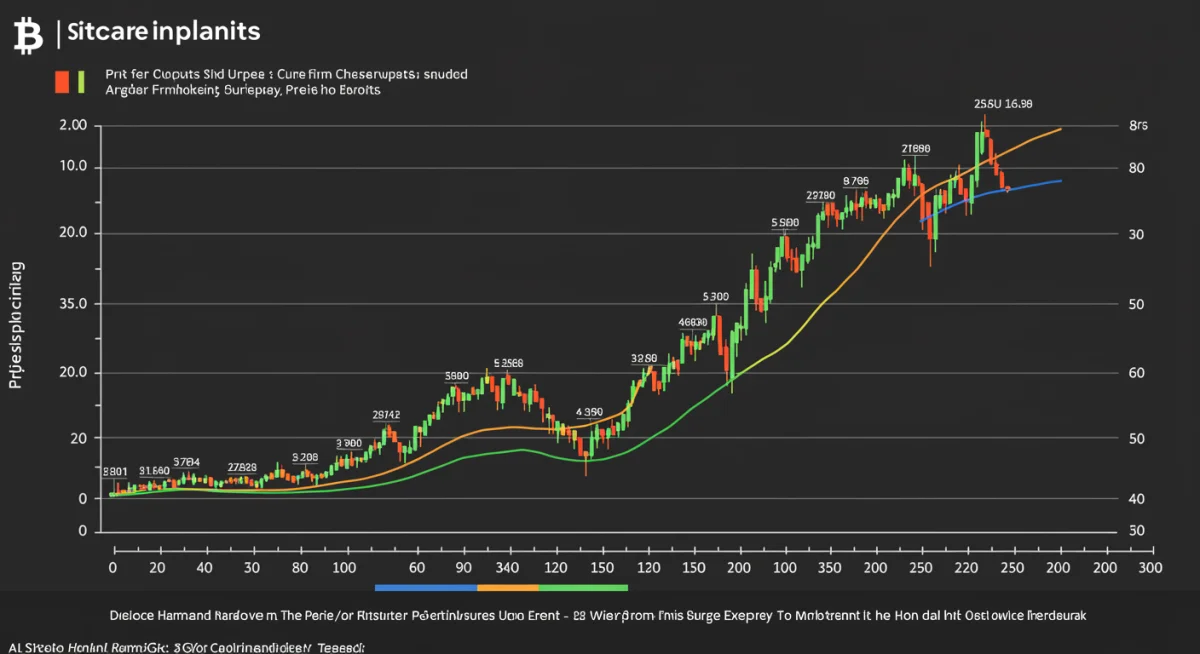
The interplay between institutional adoption and regulatory scrutiny also impacts market liquidity and stability. As more regulated entities enter the space, market depth increases, and extreme price swings might become less frequent, or at least more predictable. This doesn’t mean the end of volatility, but rather a shift towards a more “grown-up” market where fundamental analysis and macroeconomic factors play a more dominant role than pure speculation. US investors should embrace this evolution, adapting their research and due diligence processes to account for these new market dynamics.
In essence, the Bitcoin Halving 2024 acts as a catalyst, accelerating the ongoing trend of Bitcoin’s integration into the traditional financial system. This integration, while bringing its own set of challenges, ultimately paves the way for a more robust and valuable asset, making it an opportune time for strategic positioning by US investors aiming for substantial gains by 2026.
Shift 3: Altcoin Ecosystem Rebalancing and Narrative Dominance
While the Bitcoin Halving 2024 directly impacts Bitcoin’s supply, its effects ripple across the entire cryptocurrency ecosystem, leading to a significant rebalancing of the altcoin market and shifting narrative dominance. Understanding these secondary effects is crucial for US investors looking beyond just Bitcoin for their 2026 profitability goals.
Historically, a strong Bitcoin bull run post-halving tends to pull the broader altcoin market along with it. This phenomenon, often dubbed “altcoin season,” occurs as profits from Bitcoin are rotated into other digital assets, seeking higher returns. However, the post-Bitcoin Halving 2024 environment will likely be more discerning. The market has matured, and investors are increasingly differentiating between projects based on fundamental utility, technological innovation, and sustainable tokenomics, rather than pure speculative hype.
The “rebalancing” will involve a flight to quality. Altcoins with strong use cases, robust development teams, active communities, and clear regulatory pathways will likely outperform those built on fleeting trends or lacking substance. Themes such as Decentralized Finance (DeFi), Non-Fungible Tokens (NFTs) with real utility, Web3 infrastructure, and Layer 2 scaling solutions are poised for continued growth. US investors should conduct thorough due diligence, focusing on projects that offer genuine solutions and have the potential for long-term adoption, rather than chasing pump-and-dump schemes.
Another critical aspect of this shift is narrative dominance. The Bitcoin Halving 2024 will undoubtedly bring Bitcoin itself into the spotlight, reinforcing its status as a store of value. However, this attention also creates a halo effect for the entire crypto space. As new capital flows into the market, investors will be searching for the “next big thing.” Identifying the prevailing narratives – whether it’s AI-driven crypto, real-world asset tokenization, or decentralized social media – and positioning oneself in projects aligned with these narratives will be key to maximizing returns by 2026.
For US investors, this means not blindly investing in every altcoin that shows a green candle. Instead, it requires a strategic approach: identifying high-conviction altcoin projects that can demonstrate tangible progress and align with emerging technological trends. The regulatory clarity sought for Bitcoin will also eventually extend to altcoins, further legitimizing well-structured projects and potentially weeding out less compliant ones. This differentiation will be a major driver of altcoin performance post-Bitcoin Halving 2024.
Furthermore, the increased sophistication of institutional investors means they are not just looking at Bitcoin. They are exploring diversified crypto portfolios, including promising altcoins. Their entry provides additional liquidity and validation for credible projects, further contributing to the altcoin rebalancing. This institutional “seal of approval” can significantly boost the prospects of certain altcoins, making them attractive targets for US investors aiming for substantial gains.

The post-Bitcoin Halving 2024 period will separate the wheat from the chaff in the altcoin market. Projects with genuine innovation and adoption potential will thrive, while those relying solely on speculative hype may falter. Smart US investors will leverage this rebalancing to build diversified portfolios that capture the growth potential of both Bitcoin and carefully selected altcoins, paving the way for a profitable 2026.
Strategic Implications for US Investors Post-Bitcoin Halving 2024
Understanding these three key market shifts – intensified supply shock and price volatility, increased institutional adoption and regulatory scrutiny, and altcoin ecosystem rebalancing – is only the first step. The real value lies in translating this understanding into actionable strategies for US investors aiming for robust profitability by 2026.
Embrace a Long-Term Perspective
The most crucial strategy is to adopt a long-term mindset. The immediate aftermath of the Bitcoin Halving 2024 might be volatile, but historically, the significant price appreciation occurs in the 12-18 months following the event. Panic selling during dips or chasing short-term pumps can erode capital. Instead, focus on Bitcoin’s fundamental value proposition as a scarce, decentralized, and censorship-resistant asset. For altcoins, evaluate their long-term roadmaps and adoption potential.
Dollar-Cost Averaging (DCA)
Given the expected volatility, dollar-cost averaging remains an incredibly effective strategy. Regularly investing a fixed amount of money into Bitcoin and selected altcoins, regardless of price fluctuations, helps mitigate the risk of timing the market incorrectly. This strategy allows US investors to accumulate more assets when prices are low and fewer when they are high, averaging out the purchase price over time and positioning them well for the eventual bull run towards 2026.
Diversification with Purpose
While Bitcoin will likely remain the anchor of any crypto portfolio, strategic diversification into high-quality altcoins is essential for maximizing profitability. As discussed, the post-Bitcoin Halving 2024 environment will favor altcoins with strong fundamentals and alignment with emerging narratives. Research projects in sectors like DeFi, NFTs with utility, Web3, and scalable Layer 2 solutions. Avoid over-diversification into speculative, low-cap coins without clear use cases.
Stay Informed on Regulatory Developments
The US regulatory landscape is continuously evolving. Staying abreast of new laws, guidelines, and tax implications is paramount. Utilize reputable sources for information, and if necessary, consult with financial and legal professionals who specialize in digital assets. Regulatory clarity can impact everything from how you report gains to which assets are considered securities, directly affecting your profitability and compliance.
Practice Risk Management
The cryptocurrency market, even with increasing maturity, remains inherently risky. Never invest more than you can afford to lose. Set clear profit targets and stop-loss levels. Consider taking profits strategically during significant price surges to de-risk your portfolio and secure gains. Rebalancing your portfolio periodically to maintain desired asset allocations is also a sound risk management practice.
Utilize On-Ramps and Off-Ramps Strategically
For US investors, understanding how to efficiently and compliantly move funds between traditional finance and crypto is crucial. Utilize regulated exchanges and platforms that offer robust security and clear reporting. Planning your on-ramps and off-ramps will ensure that when the time comes to realize profits by 2026, the process is smooth and compliant with financial regulations.
The Road to 2026 Profitability: A Post-Halving Outlook
The Bitcoin Halving 2024 is not just another date on the calendar; it’s a seismic event that will reconfigure the dynamics of the crypto market. For US investors, the period leading up to and following this halving presents a unique window of opportunity for substantial profitability by 2026. By understanding the intensified supply shock, embracing the implications of increased institutional adoption and regulatory scrutiny, and strategically navigating the altcoin ecosystem rebalancing, investors can position themselves for significant gains.
The confluence of reduced supply, growing institutional demand, and a maturing regulatory environment creates a powerful bullish cocktail for Bitcoin. This, in turn, will likely catalyze a broader market rally, benefiting well-researched altcoin projects. However, success will not be guaranteed to the passive observer. It will require diligent research, a disciplined investment approach, and a willingness to adapt to evolving market conditions.
The narrative of Bitcoin as “digital gold” will be reinforced, attracting more conservative capital, while innovative altcoins will continue to push the boundaries of decentralized technology. US investors who can differentiate between hype and genuine utility, and who prioritize long-term growth over short-term speculation, will be the ones celebrating their portfolios in 2026.
The Bitcoin Halving 2024 is more than just a reduction in mining rewards; it’s a testament to Bitcoin’s programmed scarcity and a powerful reminder of its long-term investment potential. Prepare now, strategize wisely, and position yourself to thrive in the exciting post-halving era. The journey to 2026 profitability starts with a deep understanding of these pivotal market shifts.