
This guide provides a comprehensive comparison of altcoin staking rewards in Q3 2026, offering insights into maximizing passive income strategies while carefully considering relevant U.S. regulatory frameworks.
Are you looking to generate passive income in the dynamic world of digital assets? Understanding and leveraging altcoin staking rewards can be a powerful strategy. This comprehensive guide will explore the landscape of altcoin staking for Q3 2026, helping you navigate potential returns and the intricate web of current U.S. regulations to maximize your earnings.
Understanding Altcoin Staking in a Shifting Landscape
Altcoin staking has evolved significantly, moving beyond simple token locking to a more sophisticated ecosystem. It involves holding and locking up cryptocurrency funds in a wallet to support the operations of a blockchain network. In return, stakers receive rewards, often in the form of additional tokens, for contributing to network security and transaction validation.
The appeal of staking lies in its potential to generate passive income, making it an attractive option for long-term holders. However, the landscape is constantly shifting, with new projects emerging and existing ones refining their staking mechanisms. Staying informed about these changes is crucial for optimizing your staking portfolio.
Proof-of-Stake Fundamentals
Most altcoins offering staking rewards operate on a Proof-of-Stake (PoS) consensus mechanism. Unlike Proof-of-Work (PoW), which relies on computational power, PoS uses staked assets to secure the network. This often results in lower energy consumption and faster transaction processing.
- Delegated Proof-of-Stake (DPoS): Allows users to delegate their tokens to validators who then secure the network on their behalf.
- Bonded Proof-of-Stake: Requires stakers to lock up their tokens, which can be slashed if validators act maliciously.
- Liquid Staking: Offers a way to stake tokens while retaining liquidity, often through derivative tokens representing the staked asset.
The choice of PoS variant can impact both the risk and reward profile of staking a particular altcoin. Understanding these underlying mechanisms is fundamental to making informed decisions about where to allocate your capital.
In essence, altcoin staking offers a decentralized way to earn rewards by participating in network governance and security. As we move into Q3 2026, the maturity of various PoS networks means a more robust and diverse range of staking opportunities, but also a need for deeper due diligence.
Evaluating Top Altcoin Staking Opportunities for Q3 2026
As Q3 2026 approaches, several altcoins stand out for their promising staking rewards and network stability. Identifying these opportunities requires a blend of analyzing current Annual Percentage Yields (APYs), network adoption, and future development roadmaps. High APYs can be enticing, but they must be balanced against the project’s long-term viability and inherent risks.
Investors should look beyond just the headline APY. Factors such as inflation rates, token unlock schedules, and the overall market capitalization of the altcoin play significant roles in determining the real value of staking rewards. A high APY on a rapidly depreciating asset might yield less in fiat terms than a moderate APY on a stable or appreciating one.
Key Metrics for Staking Selection
When evaluating altcoins for staking, several metrics are paramount. These go beyond simple reward rates and delve into the economic health and security of the underlying blockchain. A holistic view ensures a more resilient staking portfolio.
- APY (Annual Percentage Yield): The most direct measure of staking returns, but often fluctuates.
- Network Security: The robustness of the blockchain and its resistance to attacks.
- Decentralization: How distributed the validator set is, impacting censorship resistance.
- Tokenomics: Supply and demand dynamics, inflation, and utility of the token.
- Development Activity: Ongoing innovation and community support for the project.
For instance, established networks like Ethereum (post-Merge) offer relatively stable, albeit sometimes lower, APYs due to their robust infrastructure and widespread adoption. Newer, smaller cap altcoins might offer higher APYs to attract stakers, but often come with increased volatility and project risk. Diversification across different risk profiles is a prudent strategy.
Ultimately, selecting the best altcoin staking opportunities for Q3 2026 involves a thorough examination of both quantitative and qualitative factors. It’s not just about chasing the highest yield but about building a sustainable passive income stream within a well-researched portfolio.
Navigating U.S. Regulatory Frameworks for Staking
The regulatory landscape for cryptocurrency in the United States is complex and continuously evolving, posing significant considerations for those involved in altcoin staking. Understanding these regulations is not just about compliance, but also about mitigating potential risks and ensuring the longevity of your passive income strategy. Q3 2026 is likely to see further clarity, but vigilance remains key.
The primary concern revolves around how staking rewards are classified by regulatory bodies like the SEC (Securities and Exchange Commission) and the IRS (Internal Revenue Service). Depending on the classification, staking rewards could be subject to different tax treatments and securities laws, which can vary by state and federal jurisdiction.
Taxation of Staking Rewards
The IRS generally views staking rewards as income at the time they are received. The fair market value of the cryptocurrency received as a reward, in U.S. dollars, is typically considered taxable income. This can complicate record-keeping, especially for those receiving frequent, small rewards from multiple protocols.
- Income Tax: Rewards are generally taxed as ordinary income upon receipt.
- Capital Gains Tax: If the staked altcoin or the reward tokens are later sold at a profit, they may also be subject to capital gains tax.
- Record Keeping: Meticulous records of acquisition dates, fair market values, and disposal dates are essential.
Furthermore, the distinction between staking as a service and direct staking can have tax implications. Using a third-party staking provider might simplify the technical aspects but could introduce additional reporting requirements or fees. Consulting with a crypto-savvy tax professional is highly recommended to ensure compliance and optimize tax strategies.
The regulatory environment for staking is still maturing. While the U.S. has yet to establish a clear, overarching framework for all crypto activities, current interpretations suggest a cautious approach. Staying updated on legislative changes and judicial rulings is paramount for any U.S.-based staker seeking to maximize their altcoin staking rewards responsibly.
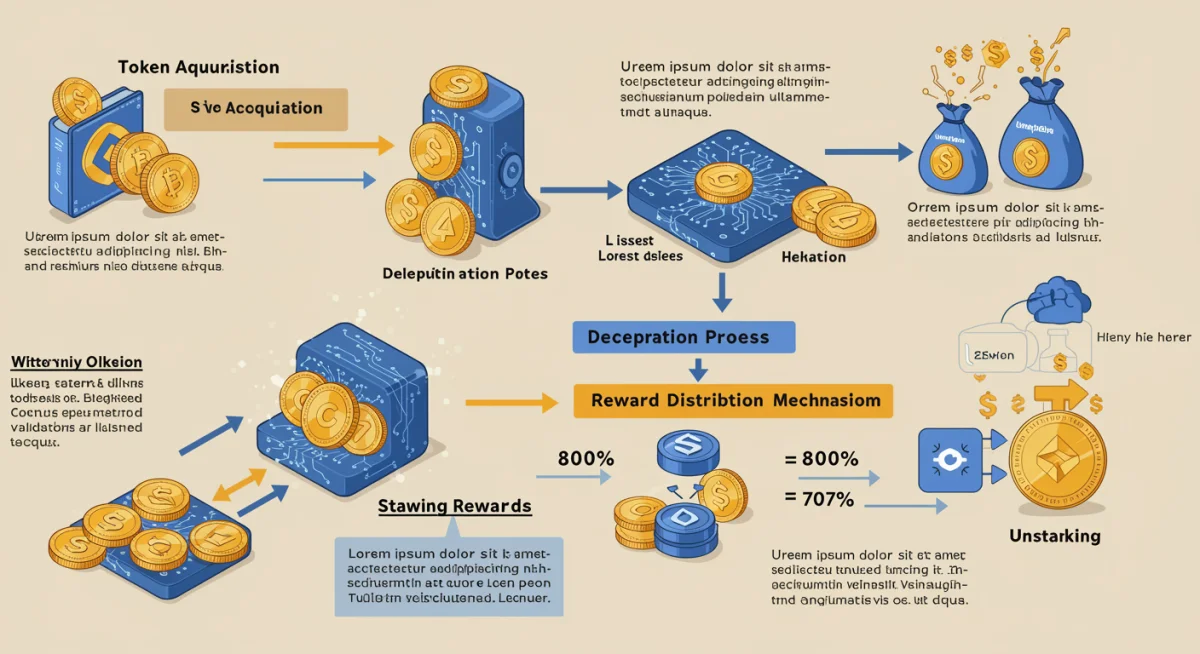
Strategies for Maximizing Passive Income Through Staking
Maximizing passive income from altcoin staking involves more than simply choosing a high APY. It requires a strategic approach that considers risk management, diversification, and an understanding of market dynamics. In Q3 2026, sophisticated strategies will differentiate successful stakers from those who merely chase yields.
One fundamental strategy is diversification. Spreading your staking capital across several different altcoins and staking protocols can mitigate the risk associated with any single project. If one altcoin underperforms or its network experiences issues, the impact on your overall portfolio is lessened.
Advanced Staking Techniques
Beyond basic staking, several advanced techniques can enhance your returns. These often involve a deeper understanding of the underlying protocols and a willingness to manage your staked assets more actively.
- Reinvesting Rewards: Compounding your earnings by staking received rewards can significantly boost long-term returns.
- Liquid Staking Derivatives: Utilizing platforms that issue liquid staking tokens allows you to earn staking rewards while also using the derivative token in other DeFi protocols.
- Yield Farming with Staked Assets: In some ecosystems, staked assets or their derivatives can be used in liquidity pools or lending protocols to earn additional yield.
However, these advanced strategies often come with increased complexity and risk. Liquid staking derivatives, for example, introduce smart contract risk and potential de-pegging from the underlying asset. Thorough research and understanding of each protocol’s risks are crucial before engaging in such strategies.
Another key element is staying informed about market cycles and project updates. The value of your staked altcoins can fluctuate dramatically, impacting the real-world value of your passive income. Adjusting your staking strategy based on market sentiment and fundamental analysis can help protect and grow your capital. By combining smart diversification with informed advanced techniques, you can significantly enhance your altcoin staking rewards.
Risks and Considerations in Altcoin Staking
While altcoin staking offers an attractive path to passive income, it is not without its risks. A comprehensive understanding of these potential pitfalls is essential for any investor looking to engage in staking, especially in the evolving market of Q3 2026. Ignoring these risks can lead to significant capital loss or reduced returns.
One of the primary risks is market volatility. The value of altcoins can be highly unpredictable, meaning that even if you earn a high APY in tokens, the fiat value of those tokens could decrease significantly. This can effectively erase any gains made from staking rewards.
Common Staking Risks
Beyond market volatility, several other risks are inherent to the staking process itself. Being aware of these helps in making more secure and informed staking decisions.
- Slashing: Validators can be penalized (slashed) for misbehavior, resulting in a loss of a portion of their staked tokens. If you delegate to a malicious or incompetent validator, your delegated tokens could also be affected.
- Lock-up Periods: Many staking protocols require tokens to be locked for a certain period, preventing you from selling them during market downturns.
- Smart Contract Risk: If you use a staking platform or a liquid staking protocol, there’s a risk of bugs or exploits in the smart contracts.
- Centralization Risk: Some networks may have a concentrated validator set, which can pose risks to decentralization and network security.
Furthermore, the technical complexity of setting up and maintaining a validator node can be daunting for individual stakers. Delegating to a staking pool or a service provider simplifies the process but introduces counterparty risk. You are entrusting your assets to a third party, and their security practices become a critical factor.
Regulatory uncertainty also remains a significant concern, particularly in the U.S. Future regulatory changes could impact the legality or profitability of certain staking activities. Therefore, a cautious and well-researched approach to altcoin staking is always advisable, balancing the potential for rewards with a realistic assessment of the associated risks.
Future Outlook for Altcoin Staking and Regulations (Q3 2026)
Looking ahead to Q3 2026 and beyond, the landscape for altcoin staking is poised for continued growth and significant regulatory developments. The increasing adoption of Proof-of-Stake networks suggests that staking will remain a cornerstone of the crypto economy, but its precise form and accessibility will largely be shaped by evolving legal frameworks.
Technological advancements will likely bring more user-friendly staking solutions, including enhanced liquid staking options and more sophisticated DeFi integrations. This could make staking more accessible to a broader audience, potentially driving further demand for PoS altcoins. However, this ease of access might also attract greater regulatory scrutiny.
Expected Regulatory Trajectories
In the U.S., Q3 2026 may see more definitive guidance from regulatory bodies. The SEC has been particularly focused on classifying crypto assets, and staking services could be a prime target for further clarification or enforcement actions. This increased clarity, while potentially restrictive in some areas, could also provide a more stable environment for legitimate operations.
- Classification Clarity: Expect clearer definitions on whether staked tokens or staking services constitute securities.
- Tax Reporting Simplification: Potential for streamlined tax reporting mechanisms for staking rewards, easing compliance burdens.
- Consumer Protection: Increased focus on protecting stakers from fraudulent schemes and insufficient disclosures.
The global regulatory environment will also influence U.S. policy. As other major jurisdictions, such as the EU with its MiCA framework, implement comprehensive crypto regulations, the U.S. might draw parallels or seek to avoid being left behind. This global convergence could lead to more harmonized, albeit potentially stricter, rules.
For investors, this means a continuous need for adaptability and informed decision-making. Staying abreast of both technological innovations and regulatory shifts will be crucial for sustainably maximizing altcoin staking rewards. The future of staking is bright, yet it requires navigating a path that balances innovation with compliance.
| Key Aspect | Brief Description |
|---|---|
| Staking Rewards | Passive income earned by locking altcoins to support network operations. |
| U.S. Regulations | Complex and evolving, impacting tax treatment and securities classification of staking. |
| Maximizing Income | Strategies include diversification, compounding, and liquid staking derivatives. |
| Key Risks | Market volatility, slashing, lock-up periods, smart contract vulnerabilities. |
Frequently Asked Questions About Altcoin Staking
Altcoin staking rewards are incentives, typically in the form of additional cryptocurrency tokens, earned by users who lock up their altcoins to help secure and validate transactions on a Proof-of-Stake blockchain network. These rewards compensate participants for their contribution to the network’s integrity and operations.
U.S. regulations in Q3 2026 primarily affect the taxation and potential securities classification of staking rewards. The IRS generally views rewards as taxable income upon receipt, while the SEC continues to assess whether certain staked assets or staking services fall under securities laws, requiring ongoing vigilance from stakers.
To maximize staking income, it’s crucial to diversify your portfolio across different altcoins, actively reinvest rewards through compounding, and explore advanced strategies like liquid staking derivatives. Always balance potential high yields with thorough research into the project’s fundamentals and associated risks.
Key risks in altcoin staking include market volatility, which can diminish the fiat value of rewards, and slashing penalties for validator misbehavior. Other risks involve lock-up periods that limit liquidity, potential smart contract vulnerabilities, and the inherent risks associated with delegating to third-party staking providers.
To ensure compliance with U.S. tax laws, maintain meticulous records of all staking rewards received, including their fair market value at the time of receipt. These rewards are generally considered ordinary income. Consulting with a qualified tax professional specializing in cryptocurrency is highly advisable for personalized guidance and accurate reporting.
Conclusion
Comparing altcoin staking rewards: a Q3 2026 guide to maximizing passive income with current U.S. regulations reveals a landscape rich with opportunity, yet equally complex. The ability to generate passive income through staking remains a powerful draw for many crypto enthusiasts. However, success in this domain hinges on a multi-faceted approach that extends beyond merely chasing the highest APY. A deep understanding of each altcoin’s underlying technology, robust risk management strategies, and an unwavering commitment to staying informed about the dynamic U.S. regulatory environment are paramount. As the crypto market matures and regulations become clearer, informed and strategic stakers will be best positioned to truly maximize their returns while navigating the evolving challenges of the digital asset world.