Bitcoin Volatility: Solutions for US Investors

Navigating Bitcoin Volatility: 4 Practical Solutions for US Investors in Current Market Conditions involves strategic approaches like dollar-cost averaging, diversification, and robust risk management to mitigate market fluctuations and foster long-term investment success.
For US investors, Navigating Bitcoin Volatility: 4 Practical Solutions for US Investors in Current Market Conditions has become a paramount concern. The digital asset market, particularly Bitcoin, is renowned for its rapid price swings, presenting both immense opportunities and significant risks. Understanding how to manage these fluctuations is crucial for anyone looking to build a resilient crypto portfolio.
Understanding Bitcoin’s inherent volatility
Bitcoin, since its inception, has been characterized by dramatic price movements. These fluctuations are often a direct result of its relatively young market, limited supply, and strong speculative interest. Unlike traditional assets, Bitcoin lacks a long historical data set to predict behavior, making its future movements less predictable and more prone to external influences.
Several factors contribute to Bitcoin’s price swings. Regulatory news, technological advancements, macroeconomic events, and even social media sentiment can trigger significant shifts. For US investors, staying informed about these drivers is the first step toward understanding the market’s pulse, though predicting exact movements remains challenging.
Key drivers of Bitcoin price fluctuations
- Market sentiment and speculation: High interest and speculative trading often amplify price movements.
- Regulatory developments: Government announcements or new laws can drastically impact investor confidence.
- Macroeconomic factors: Inflation, interest rates, and global economic stability often influence risk-on assets like Bitcoin.
- Technological advancements: Updates to the Bitcoin network or competing cryptocurrencies can affect its perceived value.
Ultimately, while volatility can be daunting, it’s an intrinsic characteristic of the Bitcoin market. Recognizing its causes and acknowledging its presence is fundamental for any investor in the United States. This foundational understanding allows for the adoption of more strategic and measured investment approaches.
Solution 1: Embracing dollar-cost averaging (DCA)
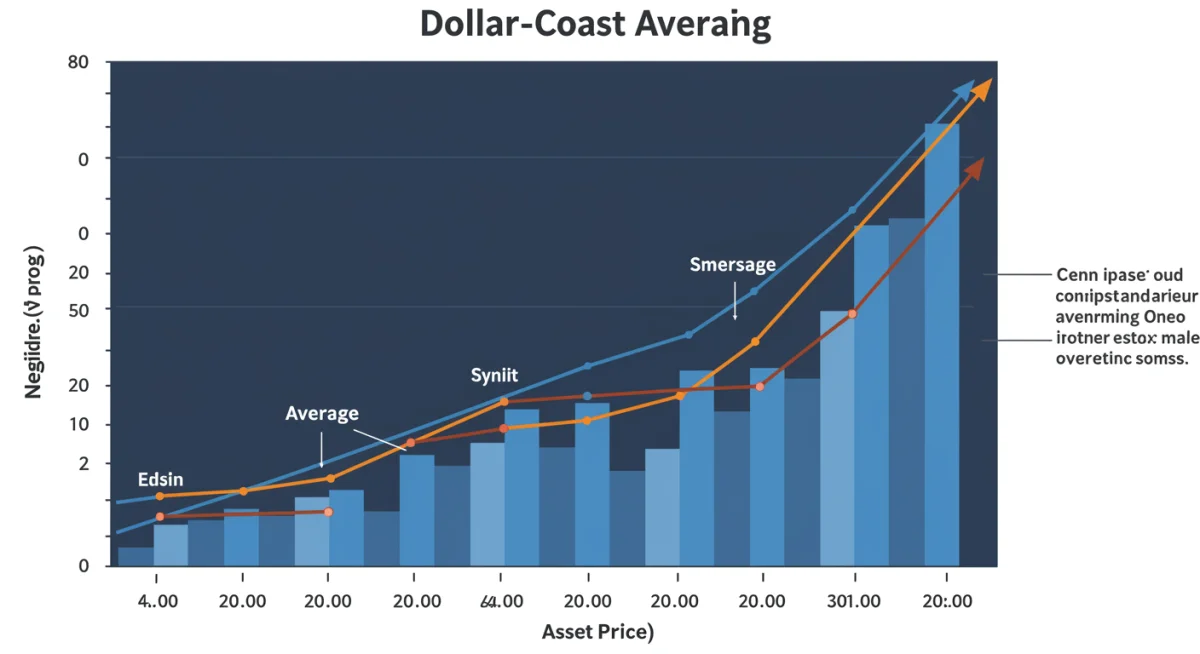
One of the most effective strategies for US investors to counter Bitcoin’s volatility is dollar-cost averaging. This method involves investing a fixed amount of money at regular intervals, regardless of the asset’s price. The core idea is to reduce the impact of volatility on the overall purchase price.
By consistently investing, you buy more Bitcoin when prices are low and less when prices are high. Over time, this averages out your purchase cost, mitigating the risk of investing a large sum at an unfortunate peak. DCA removes the emotional component of timing the market, which is notoriously difficult even for seasoned professionals.

Benefits of implementing DCA
- Reduces emotional trading: Automating investments removes the urge to panic buy or sell.
- Minimizes timing risk: No need to predict market bottoms or tops, as investments are spread out.
- Accessible for all budgets: Even small, regular investments can accumulate significant holdings over time.
DCA is particularly well-suited for long-term investors who believe in Bitcoin’s fundamental value and future potential. It transforms volatility from a threat into an opportunity, allowing investors to accumulate assets steadily without being overwhelmed by short-term price swings. It’s a disciplined approach that fosters patience and consistency.
Solution 2: Portfolio diversification beyond Bitcoin
While Bitcoin is a foundational cryptocurrency, relying solely on it can amplify risk due to its volatility. Diversifying your crypto portfolio by including other digital assets can significantly reduce overall risk exposure. This strategy aligns with traditional investment wisdom: don’t put all your eggs in one basket.
Diversification in crypto involves investing in a range of assets that may react differently to market conditions. This could include stablecoins, which are pegged to fiat currencies, or other altcoins with different use cases, market caps, and risk profiles. The goal is to create a portfolio where the underperformance of one asset is offset by the stronger performance of another.
Strategic diversification approaches
- Layer 1 Blockchains: Consider adding other major cryptocurrencies like Ethereum, which has a different ecosystem and development roadmap.
- Stablecoins: Allocate a portion to stablecoins (e.g., USDC, USDT) to preserve capital during market downturns.
- Decentralized Finance (DeFi) tokens: Explore tokens from established DeFi protocols for exposure to a rapidly growing sector.
- Emerging technologies: Invest in projects focused on specific niches like NFTs, metaverse, or Web3 for potential future growth.
However, diversification doesn’t mean blindly investing in every new coin. Thorough research into each asset’s fundamentals, team, technology, and market cap is crucial. A well-diversified crypto portfolio for a US investor should reflect a thoughtful balance of risk and potential reward, tailored to individual financial goals and risk tolerance. It’s about spreading risk intelligently, not just widely.
Solution 3: Implementing robust risk management strategies
Effective risk management is indispensable when Navigating Bitcoin Volatility: 4 Practical Solutions for US Investors in Current Market Conditions. This involves setting clear boundaries for potential losses and protecting your capital. Without a solid risk management plan, even the most promising investments can lead to significant setbacks during volatile periods.
One primary aspect of risk management is determining your personal risk tolerance. This involves an honest assessment of how much you are willing to lose without significantly impacting your financial well-being. Once this is established, you can set stop-loss orders, manage position sizes, and allocate capital appropriately across your portfolio. Never invest more than you can afford to lose.
Essential risk management tools and practices
- Stop-loss orders: Automatically sell an asset if it falls to a predetermined price, limiting potential losses.
- Position sizing: Adjust the amount invested in each asset based on its risk profile and your overall portfolio size.
- Profit taking: Periodically secure profits to de-risk your position and reinvest in other opportunities or hold in stable assets.
- Emergency fund: Ensure you have a robust emergency fund in traditional assets before investing heavily in crypto.
Moreover, continuous monitoring of your portfolio and the broader market is vital. Market conditions can change rapidly, and a static risk management plan may become outdated. Regularly review your strategy, adjust stop-loss levels, and rebalance your portfolio to maintain your desired risk exposure. This proactive approach helps safeguard your investments against unexpected market shifts.
Solution 4: Long-term perspective and education
Perhaps the most profound solution for Navigating Bitcoin Volatility: 4 Practical Solutions for US Investors in Current Market Conditions is adopting a long-term investment horizon combined with continuous education. Short-term price movements often generate emotional responses, leading to impulsive decisions that are detrimental to long-term growth.
A long-term perspective encourages investors to look beyond daily or weekly price fluctuations and focus on Bitcoin’s fundamental value proposition and its role in the evolving digital economy. Historically, assets with strong fundamentals tend to recover from downturns and achieve new highs over extended periods. Patience is a virtue in volatile markets.
The power of continuous learning
- Stay informed: Follow reputable crypto news sources, research papers, and industry analyses.
- Understand blockchain technology: Grasping the underlying technology helps evaluate Bitcoin’s long-term potential.
- Learn from market cycles: Study historical Bitcoin cycles to understand patterns of accumulation, parabolic rises, and corrections.
- Avoid hype and FUD: Distinguish between factual information and speculative noise or fear-mongering.
Education is an ongoing process. The cryptocurrency space is dynamic, with new technologies, regulations, and market trends emerging constantly. By staying informed and continuously learning, US investors can make more rational decisions, identify genuine opportunities, and avoid common pitfalls. This combination of a long-term view and a commitment to education builds resilience against market volatility.
Regulatory landscape and its impact on US investors
The regulatory environment in the United States significantly influences how investors approach Bitcoin and other cryptocurrencies. Clarity and consistency in regulation can either foster innovation and investment or stifle it. Currently, the US is still developing a comprehensive framework, leading to a complex and sometimes uncertain landscape for crypto investors.
Different agencies, such as the SEC, CFTC, and Treasury, each play a role in overseeing various aspects of the crypto market. This fragmented approach can create challenges, particularly regarding taxation, securities classification, and consumer protection. Understanding these nuances is vital for US investors to ensure compliance and make informed decisions.
Key regulatory considerations for US investors
- Taxation: Crypto transactions are generally treated as property for tax purposes, requiring careful record-keeping.
- Securities classification: The debate over whether certain cryptocurrencies are securities impacts how they can be offered and traded.
- Consumer protection: Regulatory efforts aim to protect investors from fraud and market manipulation.
- State-specific laws: Beyond federal regulations, individual states may have their own laws governing crypto activities.
As the regulatory landscape evolves, US investors must remain vigilant and adapt their strategies accordingly. Staying updated on legislative developments and consulting with financial and tax professionals specializing in crypto can help navigate this complex terrain. A proactive approach to understanding regulations is a critical component of successful crypto investing in the US.
Future outlook for Bitcoin and US investors
The future of Bitcoin for US investors is a topic of intense debate and speculation. While its volatility remains a constant, many analysts and institutions believe in its long-term potential as a digital store of value and a foundational technology for a new financial system. The increasing institutional adoption and development of regulatory clarity could pave the way for greater stability and mainstream acceptance.
Technological advancements, such as the Lightning Network, aim to improve Bitcoin’s scalability and utility, potentially driving further adoption. As more businesses and individuals integrate Bitcoin into their operations, its network effect strengthens, reinforcing its position in the global financial landscape. However, challenges like energy consumption concerns and competition from other digital assets persist.
Potential catalysts for Bitcoin’s future growth
- Institutional adoption: More corporations and financial institutions adding Bitcoin to their balance sheets.
- Regulatory clarity: A clear and supportive regulatory framework in the US and globally.
- Technological improvements: Enhancements to Bitcoin’s scalability and transaction speed.
- Increased retail adoption: Growing acceptance of Bitcoin for everyday transactions.
Ultimately, the outlook for Bitcoin in the US depends on a confluence of technological innovation, regulatory progress, and market demand. For US investors, maintaining a balanced perspective, coupled with the practical solutions discussed, will be crucial in harnessing Bitcoin’s potential while effectively managing its inherent risks. The journey may be volatile, but the destination could be transformative.
| Solution | Brief Description |
|---|---|
| Dollar-Cost Averaging | Invest fixed amounts regularly to average purchase price and reduce volatility impact. |
| Portfolio Diversification | Spread investments across various crypto assets to mitigate risk. |
| Robust Risk Management | Set stop-losses and manage position sizes to protect capital from severe downturns. |
| Long-Term View & Education | Focus on Bitcoin’s long-term potential and continuously educate yourself on market trends. |
Frequently asked questions about Bitcoin volatility
Bitcoin’s volatility stems from its relatively small market size compared to traditional assets, speculative trading, rapid adoption rates, and its susceptibility to news and regulatory developments. These factors collectively contribute to its significant price swings, making it a high-risk, high-reward asset.
Dollar-cost averaging is generally suitable for most US investors, especially those with a long-term investment horizon who want to reduce the impact of market timing. It simplifies the investment process and helps mitigate risk, making it a practical strategy for various risk tolerances.
Diversification helps by spreading investment risk across different assets. If Bitcoin experiences a downturn, other assets in your portfolio might perform better, balancing out losses. This strategy aims to reduce overall portfolio volatility and enhance stability over time.
Regulations significantly impact Bitcoin’s price by influencing investor confidence and market access. Positive regulatory clarity can boost adoption and price, while restrictive or uncertain regulations can lead to fear and price drops. US regulatory developments are particularly impactful due to the size of the US market.
If you’re new to crypto, it’s crucial to start with thorough research and a clear understanding of Bitcoin’s volatility. Begin with a small, manageable investment and consider strategies like dollar-cost averaging. Prioritize education and never invest more than you are prepared to lose.
Conclusion
Navigating Bitcoin Volatility: 4 Practical Solutions for US Investors in Current Market Conditions is not merely about surviving market swings; it’s about thriving within them. By diligently applying strategies such as dollar-cost averaging, diversifying portfolios, implementing robust risk management, and maintaining a long-term, educated perspective, US investors can transform volatility from a daunting challenge into a strategic advantage. The cryptocurrency market, while unpredictable, offers significant opportunities for those who approach it with discipline and foresight. Staying informed about the evolving regulatory landscape and Bitcoin’s technological advancements will further empower investors to make sound decisions and work towards their financial goals in this dynamic digital frontier.